August 1, 2010

Visiting the Community Pictures

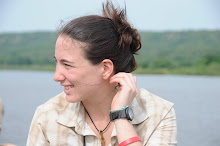
These pictures were taken on Kime by Asha Tanna, the BBC journalist. Please don't republish them anywhere.


Visiting the Community

Ngamba Island is part of an island chain that is home to numerous fishing villages and small towns. As part of their conservation work, CSWCT funds community outreach projects like school construction, conservation education, inter-island football tournaments, and women’s collectives that make crafts to be sold in the island shop, to name a few. And whenever the want to or have to have to travel to another island, they call it “visiting the Community.”

I have been to other islands three times now and each time has been an eye-opening, shocking, totally worthwhile experience. Living on Ngamba is a very sheltered existence. Living on the other islands is not.

Most of the inhabitants of these islands are fishermen, supporting themselves by fishing for silverfish, Nile perch, and tilapia (although there is also a thriving criminal community that is hiding out from the mainland police here, with all the accompaniments you would imagine of such a group). Some of the islands host around 2,000 people while others only a hundred or so.

The first island I visited was Kime (pronounced CHI-meh), the closest and, I believe, largest island. I went with some of the caregivers as my guides. This was my first time wandering around in what I would consider an African slum.

At first, all I could see was poverty, overwhelming poverty. Malnourished children with enormous bellies were running around, some with younger siblings on their backs. Most lacked shoes and I can’t remember any that were wearing untorn clothing. The houses were tiny, maybe 10 feet across, and placed directly next to each other. Some had doors but many simply had a piece of cloth strung in front of the entrance. Chickens, ducks, and goats wandered around the alleys. Everything was dirty.

As soon as I stopped feeling shocked and started actually looking at Kime, my opinion changed. Yes, the children were malnourished and not clothed properly, but they were smiling. The women sitting outside their homes preparing food were gossiping and laughing like women do everywhere. The men were sitting around working on nets, eating, or playing dice games just like they would in any city. And the houses that were so appalling small and ramshackle… on closer examination they had small decorations covering them- bottle caps underneath the nails, drawings and designs around the doors, and those cloths covering the doors were colorful and even lacy at times. I am very embarrassed to admit it took me about 10 minutes to realize that people could be happy here, and that a place that has nothing can still contain lives that mean something.

Around this time I began to collect a hoard of children. I had gotten pretty used to being called Mzungu (foreigner/whitie) as a name, but I had never experienced the degree of celebrity one can achieve as a Mzungu. The kids, around 4-8 years old, crowded around me, chanting “Mzungu! Mzungu!” and fighting for a chance to hold my hand. They followed me wherever my guides and I went. One boy held onto my hand for about 5 minutes and seemed ecstatic- he was smiling from ear to ear and kept touching his forehead to our joined hands as he proudly showed off to the other children. One young girl, Rihema, who was probably about 8-years-old was quite shy but still wanted to walk around with the group. She carried her younger sister (around 2 or 3) on her back the entire time, even though her sister must have been nearly half her size. When we went back to the shore, the children followed us and gathered round to help push our canoe into the water. I’m not sure how much help we needed from 15 tiny children, but the send-off was quite touching.

The second island I visited was Mweya (pronounced (m)WAY-uh). I was prepared for a similar experience as Kime, but instead of a big, city-like town, I found a small fishing village of about 300 people. Here, there was more space between the houses, which were made of mud and wood rather than metal and wood as on Kime. Stanny (the head caregiver), Joseph (the Ugandan intern), Phillip (a caregiver), Zarin, and I were going to the school there to drop off a football and check on the progress of the school’s garden, planted by CSWCT to provide food for lunch. The students really appreciated the new football (or soccer ball, in American parlance) and the teachers really appreciated our visit- they had us sign their guestbook. While the younger children from the town had followed us up the hill to the school, the students were more restrained and didn’t crowd around, although we had lots of girls craning their necks to see out the door. Before leaving, we had a mini-hike to the other side of the island. I wish I had brought my camera because it was a stunning landscape and had flora that I had never seen before; it almost reminded me of the area on Mt. Kinabalu above the tree-line. We stared across Lake Victoria and strained to make out Tanzania on the other side, but it was far too far away.

Finally, the third time I went off-island to the Community I traveled with Joseph (the Ugandan intern), Hosea (our maintenance guy), Asha (the BBC reporter), and Carly (a Canadian volunteer on her way up to Hoima to teach for a month). We visited Kime again, but started out on the opposite side of the island, which resembled Mweya rather than the first city. There, we saw the burial ground (it was combined with a traditional medicine station, but no pictures or shoes were allowed), were invited to join in an amarura circle (where people all drink a beer-like alcohol out of the same pot- we declined) and watched fish being smoked in pits. Cue the Mzungu chants and hoards of children again. After a brief stay on that side of the island, we went back to the first city. This time, Hosea wanted to show us the churches, so we trekked up hill to visit the 5 or so small churches they have there. We narrowly escaped having to listen to a sermon (Hosea was disappointed) because the preacher didn’t speak any English or like to preach on that day.

So those have been a brief(ish) recap of my experiences in the Community.

July 18, 2010

Research Continues Apace

My research advisor and current personal hero Zarin Machanda just visited me at Ngamba. She came by for 4 days to help me pin down exactly what I’m doing and perfect my methodology; the main focus of my thesis will be social bonds and structurally it will be separated into a couple different sections. There will be one part on rough and tumble play’s relationship to social bonds (whether and how it strengthens them and what effect bond strength has on the way animals play fight), one part on general bond characteristics such as how much variability there is, whether there are sex differences, whether females in a group of all females behave more like males in terms of bond formation than females in a mixed group (assuming there are sex differences), and finally I’ll try to figure out what makes a partner attractive as a friend (so what affect sex, rank, size, age, and years of familiarity have on partner preference). Depending on how much I find and how much data I collect, I may include a comparative section on bonds in semi-wild vs. wild chimps from the Kanyawara community.

In addition to being my hero for helping me with research, Zarin is my hero because she has supplied me with a month’s worth of peanut butter, cookies, chocolate, chips, and nutella. When you have been eating mainly beans and posho for about 3 weeks, those snacks seem to be surrounded by the faint glow of a halo. She also gave me the first 2 seasons of 6 Feet Under to treat my island fever.

Random Island News: A woman from the BBC is here doing a piece on chimpanzees in Uganda. I was her camerawoman today. So what now Mell, I work for the BBC too!
Here are some pictures Zarin took while on the island. There are a couple of me doing research, the individual with the crazy dark wrinkles on his face is Baluku, the two thuggish chimps are Eddy (the former alpha) and Nagoti (Rambo’s adoptive mother), there’s a picture of Afrika on the termite mound, and also a view looking out our door of what the lake flies can be like. Sorry for not captioning each photograph individually, but I’m blaming the internet for that.


July 13, 2010

Bombings in Kampala

There were three bombings in Kampala during the World Cup final this Sunday. 74 people were killed and many more were injured. The Somali terrorist group al Shabaab has claimed resposibility, justifying the attacks because of Uganda's military presence in their country. Uganda (and Burundi) have troops there in order to shore up the government, which al-Shabaab does not want shored up. Foreigners and soccer fans were targeted for religious reasons (Westerners and sports are anathema to their premises), and Ethopian Village (one of the attack sites) was chosen because of Ethiopia's relationship with Somalia.

No one I know was injured or killed during the attacks, and thankfully none of the staff on the island were personally connected to the victims.

I could rant and rave and write about how sick, angry, and sad this makes me feel, but I am sure everyone reading this already understands those feelings.

July 8, 2010

More and more pictures (the internet is happy today)

The alpha male, Mika:
And his sexy paramour, Natasha:
The adorable Afrika, hanging out on her hammock:
Nani, the first chimpanzee I ever held:
Rutoto, a young male with the puffiest coat imaginable
My home right now. The red building is the vet office, the resource center (where the office, living room, and researher bedrooms are) is the one behind it, and the roof in the background is part of the viewing area:

July 7, 2010

More Pictures

Tumbo has the most amazing face (this picture was taken by the researchers before me).

This ridiculous fellow is Sunday, an ex circus chimp who clearly has a big appetite.


And here's just some play fighting

Life on the Island

I am writing after far too long a break. To apologize here is a synopsis of my day-to-day existence on the island complete with some chimpy anecdotes:

6:45: My alarm goes off- quite unnecessarily, I might add, as I have already been awakened by honking geese, screaming chimpanzees, or laughing humans.
7-7:50: I perform my morning ablutions.
7:50-8:30: First research bout of the day! First, I choose the chimp I would like to do a focal on based on ages and who I haven’t surveyed yet. Then, I choose the actual chimp I will focal based on whom I can recognize and who is visible in the enclosure. The first part takes place in the enclosure section: cages where all 44 animals sleep each night. These can get pretty chaotic, as you would imagine.
8:30-10:30: Mill about. Have some breakfast. Miss real coffee. Do some coding or think about research.
10:30-10:50: Second research bout of the day! I head over to the smaller outdoor enclosure, where the integration group is housed. Along the way I have to pass through treacherous enemy territory: a plover’s nest site. As soon as this beast sees me approaching it begins its ominous cheeping. This irritating noise is always followed by a swooping attack- she flies directly at my face, talons outstretched; so far she hasn’t gotten near enough to actually rake me, but it’s been close.
[Authorial Aside: I just paused in the recitation of the dangers of my research to duck as another aerial assailant attacks. And by aerial assailant, I mean a tiny, adorable fruit bat. And by attacks, I mean flies around frantically as it tries to find its way out. Having relocated to the office for the duration of its visit, I will continue.]
The platform from which I observe this group is… less than ideal. Long fenced off because of its rotting planks and unstable construction, this deck has been slated for removal for some time. As I slip underneath two planks that block off the stairs, I walk through countless spider webs. The amount of tiny spiders here is dwarfed only by the amount of tiny lake flies, their prey. If you stand in one place for more than about 30 seconds, a spider will start making a web on you. I am not exaggerating. I have video to prove it. Anyway, once I reach the top of the stairs, I have to be careful to stand close to the support beams and away from the remains of the walkway. I say remains because that’s all that’s left. You see, the long-planned but never implemented removal began approximately 2 days after I began my research, but they’ve generously left me a small amount of platform.
The group housed in the smaller enclosure has to be kept separate. There are two new juveniles, Afrika and Baron, who haven’t been introduced to everyone yet. So far, they can only be housed with juvenile females, because the males and adults would literally rip them to shreds. Don’t you love chimps? But anyway, this enclosure is way calmer than the other because of its inhabitants, and Afrika is probably the cutest thing in the whole world, so I like it better.
10:50-11:10: Third research bout of the day! I jog over to the larger enclosure, where the rest of the chimps spend their days. This is the forest enclosure, about 90 acres of jungle that for the chimps.
[Authorial Aside: The bat, or one of its friends, has followed me to the office.]
I go through my picking of a focal individual rigmarole and collect 10 minutes of data before the visitors and the food arrive. I often have to dodge tourists or push through the crowds to keep my camera on my chosen individual for the next 10 minutes of feeding. This group is more like a true chimpanzee community because of the mix of ages and sexes. It also contains the alpha male, Mika. Two years ago, he allied with another male Robbie to overthrow the previous alpha, Eddy. You can always tell when Mika is about to arrive on the scene. A slow, low “hooooo”-ing gradually rises in volume and pitch, turning into a crescendo of shrieks that accompanies a charging, puffed up chimp’s pounding on the ground and drumming on tree trunks. Mika is instantly recognizable from the way others cringe away from him and pant-hoot if he comes close. But like any true leader, Mika has his weakness- Natasha.
Natasha is the sexiest chimp lady ever. Mika likes to have her close all the time. She’s never kept back for research because Mika won’t allow it. One time, Natasha wanted to sleep in the forest instead of coming back for dinner and hammocks. So Mika stayed out in the forest with her. And because he’s the alpha male, the rest of the group stayed out too. The caregivers tried to coax them inside for an hour, but Natasha wouldn’t budge, so Mika wouldn’t budge, so the rest of the group wouldn’t budge, so no one got dinner, all in the name of chimp love.
[Authorial Aside: skip this paragraph if you’re a little prudish] Chimps cycle in the same way that human females cycle and are able to conceive for only a couple of days around ovulation. During that time, the alpha male is generally the only male who mates with the female, although she mates with all the males in the group during her cycle. To advertise their fecundity, the area around their anogenital region swells, and is maximally swollen just as they ovulate. Normally females are maximally swollen for a couple days. Somehow, Natasha remains at peak swelling (and thus peak sexiness) for a week to two weeks. Hot damn.
11:10-1: Mill about. Do laundry. Do work. Walk around the island and love life.
1-2: Lunch. Beans and posho. Posho and beans. Posho. And. Beans. Every. Day. If the cook is feeling really crazy, there are a couple peppers mixed in with the beans. Or maybe there’s white rice instead of posho, but that’s only happened once.
2-2:20: Fourth research bout of the day! Back to the small enclosure. Around this time, it’s pretty hot so the chimps aren’t as active as they are earlier in the day. So most days I arrive to find a big cuddle puddle of chimps on the wooden climbing jungle playground thing in the middle of the enclosure. Or there may be a few circled around the fake termite mound that’s filled with honey. Watching them fish for honey is great. They break a stick off of a nearby bush, trim off the leaves and small twigs, dip it into the mound, expertly pull it out dripping with honey, and delicately lick their treat off the stick. Well, most of them do it expertly. Baron, a six-year-old male, watches the females for a few minutes before tumbling off to play. Afrika, a three-year-old girl, takes a stick and shoves it at the holes, often missing or breaking her tool. She sits next to Nani, watching intently as she dips and gets honey, then Afrika steals her stick to try again. Occasionally she figures it out, but mainly she perches on top of the mound, observing.
2:20-2:40: Fifth research bout of the day! Back to the big enclosure for the afternoon feeding. I can’t think of a graceful way to insert an anecdote here, so you don’t get one.
2:40-6: Free time! I like to go sit next to Lake Victoria and read for an hour or so at this time, then shower while it’s still hot. I also practice backgammon and mancala (which I taught myself how to play after randomly finding them on my computer).
6-6:30: Final research bout of the day! The evening feeding occurs when the chimps come back voluntarily to get some millet porridge (which they drink from bowls through the bars) and cabbage or tasty fruits. This is the only time I can get data from Mawa or Asega. These naughty males can never leave the cages because they’re too smart for their own good. The forest, although enclosed by an electric fence, was apparently not interesting enough for these fellows and they jumped it one too many times. And since a full-grown male chimpanzee can kill a human pretty easily, it seems best to just keep them in the more secure enclosure. Since I’ve been here, there’s been only one escape: on the first day Afrika and Baron went to the outdoor enclosure, Pasa (a juvenile female) got so excited she crawled under the fence to go looking for them. Luckily, she was quickly ushered into the cages, and the next day was allowed to go into the small enclosure with her little buddies, whom she likes to baby sit.
The rest of the evening: Do some work or mill about until dinner at 8. I like to watch the sun set from the pier. Dinner is posho/matooke, rice (sometimes with a tin bit of chopped up carrots in it), a stew (there are two variations: fish is good, beef is gross), and beans. I am pretty sick of the food here. But I’ve started ordering my own avocados, bananas, and mangoes to supplement my diet. I feel silly though, eating chimp food that I buy from the same people who sell us the real chimp food. If there’s a world cup match, I’ll watch the first half with the rest of the guys. But I get sleepy and like to go to bed by 10:30.

So there you have it. This is my life right now.

Tropical Health Update:
I have had a tummy ache for the past two days :( But my most serious problem was entirely my own fault. Two nights before coming to the island I was hanging out with some Canadian soldiers on leave, and we decided it would be a good idea to sample all the kinds of Ugandan alcohol. I got a little too buzzy and didn’t drink enough water when I took doxy (my anti-malarial). I woke up a couple hours later to an excruciating pain in my throat- it had gotten stuck and burned my esophagus (haha- Jo Read warned me, but did I listen?). It took about a week to stop hurting whenever I swallowed, but I’m fine now.
Also, I look like Rudolf right now. And I am becoming completely covered in freckles.