I spent yesterday with Flakes, a group that broke off from Abby's group several years ago. This is the part of the forest I've liked best so far (at least before the river flooded and cut us off from the main road). I was able to get a few pictures and videos, so enjoy:
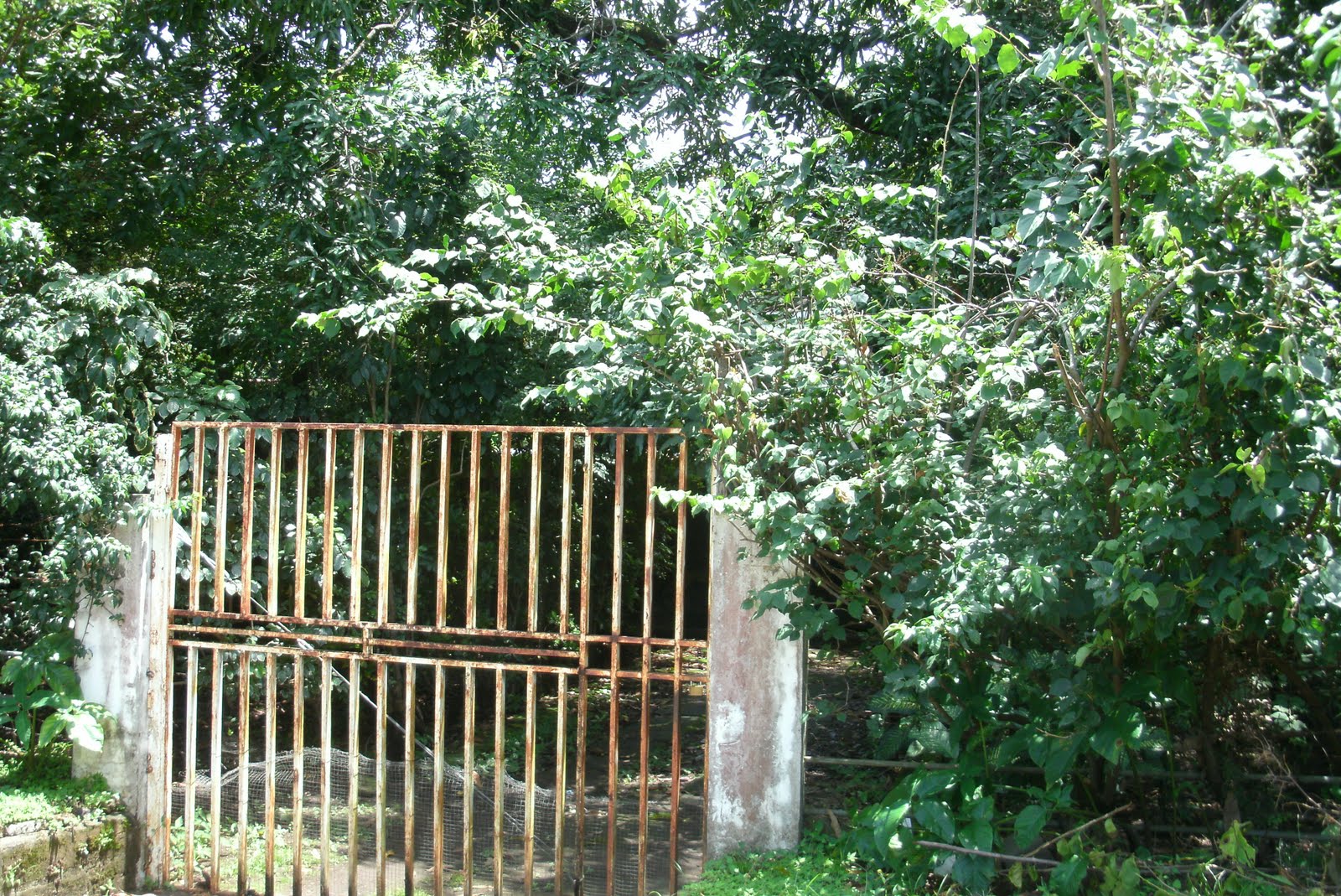
2 views of the forest:
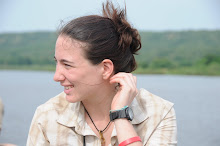
This is what it's like to do research here. The girl in the photo is Rhiannon, the field manager.
Monkeys through the vines and monkeys playing in the vines
A baby monkey (possibly Darth Vader) making an adorable toothless threatface during play with his daddy, the alpha male Quijote. Here's a video of the action: Flakes Play
Me in the jungle! If you look closely, you can tell that fully half of my forehead is swollen from mosquito bites. Ridiculous.
August 25, 2011
August 23, 2011
Cliffs.
Today was a day of cliffs. Lots and lots of cliffs. Steep slopes between ridges and valleys and more ridges and valleys. The monkeys had it easy today. The moneros, not so much.
I was reminded of the mac gym today as I treadmilled my way up the steep slopes. I stepped up and up and up but just went down as the ground slipped away beneath me. I had to test each step before I took it to make sure it wouldn't crumble away beneath my weight, sending me careening into thorny vine tangles 5 meters below. I couldn't even trust the rocks- those were the treacherous bits, the bits you thought were solid and safe until a 10 pound chunk comes off at the first touch of your hand.
As terrifying as that was, I got an awesome adrenalin rush as I finished each up or down (the downs were way harder than the ups). I made it! Mostly intact! Still sort of with the monkeys!
Today wasn't a great day for monkey viewing since it was so steep and viney, but my quads and gluts are going to look great.
I was reminded of the mac gym today as I treadmilled my way up the steep slopes. I stepped up and up and up but just went down as the ground slipped away beneath me. I had to test each step before I took it to make sure it wouldn't crumble away beneath my weight, sending me careening into thorny vine tangles 5 meters below. I couldn't even trust the rocks- those were the treacherous bits, the bits you thought were solid and safe until a 10 pound chunk comes off at the first touch of your hand.
As terrifying as that was, I got an awesome adrenalin rush as I finished each up or down (the downs were way harder than the ups). I made it! Mostly intact! Still sort of with the monkeys!
Today wasn't a great day for monkey viewing since it was so steep and viney, but my quads and gluts are going to look great.
August 22, 2011
Yellow House and Bagaces
Hello all!
Here's a quick post with a few pictures of my life outside the jungle (it exists! and is civilized!)
Here's the park in the town of Bagaces (my town). It is lovely.
Here's the street to town (it's a minute walk to get to town).
Here's the street outside Yellow House!

Here's a quick post with a few pictures of my life outside the jungle (it exists! and is civilized!)
Here's the park in the town of Bagaces (my town). It is lovely.
Here's the street to town (it's a minute walk to get to town).
Here's the street outside Yellow House!
Here's the gate to Yellow House!
Here's my new room! Or my half of it.
This is a psion (the handheld computer on which we collect data in the field)
August 19, 2011
Lomas Barbudal Capuchin Project!
A new chapter in my monkey studies is about to begin! I have just arrived in Costa Rica to study capuchin monkeys with the Lomas Barbudal Monkey Project. The site is near the town of Bagaces in Guanacaste (the northwest region of Costa Rica).
I have spent 2 days in the forest with the monkeys already and am on my way to becoming a monera: monkey person. On my first day I started off with Weibke (a veteren monera and data analyst) and Yukiko (a Japanese girl who's been with the project about a year) searching for a group of monkeys called Pelon. We were initially unsuccessful and didn't find anything for the first two hours. We did see some howler monkeys, which are pretty cute and make an absurd amount of noise.
But then! Lo and behold Weibke hears a monkey call and we crash through the forest after it! We find some monkeys, but it's Cupi's group rather than Pelon. We hang out with them for a bit so I can see some capuchins, but then we take off again. We travel onwards so more, crashing through the forest (which is technically a tropical dry forest). Along the way I learn to be SUPER careful of Acacia and their ant protectors. Whilst they may be an awesome example of symbiotic mutualism, they are way more fun to encounter in a textbook than in real life.
After traveling some more Weibke hears some more monkeys. I am so busy watching where I put my feet and being exhausted at 9 am that I have no idea how she can pay attention to distint leaf shaking and faint vocalizations half a mile away. Impressive. Our next monkey group also fails to be Pelon. Abby's group, the first group under observation at this site, is one of the largest and has a ton of juveniles. Which makes for some awesome play. We stayed there for a few hours, watching them as I try to learn to distinguish monkey faces and the real researchers take some ad lib data. They were lovely. I cannot belive how habituated these monkeys. They were playing on the ground a few feet from me. And were totally indifferent to my presence, except when they would occasionally threat face at me.
All of a sudden we hear a "VA M" (enemy monkey alarm) from the edge of the group. Intergroup! We rush over to try to catch a fight but Abby's group appears to be fleeing from the enemy monkeys. Alas. We decide to chase after the other group of monkeys in the hopes of finding Pelon, and finally we have success. :)
We join up with Pelon as they too flee from the enemy monkeys. The first bit consists of just trying to keep up with them as they move (seemingly effortlessly) across ridges and down steep slopes and up steep slopes and down steep slopes and up steep slopes and down... They chill out and go to a nice area where they come down from the trees a bit. There's a lot of foraging, some playing, some fighting, but they seem quite relaxed. I listen in as Weibke and Yuki do focal follows of particular monkeys. Later in the day I try spotting my own follow. Generally, two researchers are needed for each follow- one to "spot" or dictate, and one to type the data onto the handheld computer psion, which is uploaded to the main computers after you get home from the field.
I saw a baby! Yuki and Weibke joint spotted a new addition to the group. It was so tiny!!! It didn't really look up from its position draped across its mother's shoulders. They think it was around a few days old.
Here's a picture of my after my first, totally awkward, follow of Benicio (BX). He's an adult male who doesn't particularly like people, so he spent a lot of the follow glaring at me as I made tons of noise moving through the forest after him.
It started getting darker around 4:30 and the monkeys foraged closer to their sleep site. Capuchin groups have several trees throughout their home ranges where they like to return to sleep, and the monkeys (especially Pelon's group) are pretty reliable. They started curling up in their sleep tree by around 5:30 and we hiked away at 5:45, once we were sure that they weren't going to give us the slip at the last minute and take off.
The sky was a crazy grayish pink as we left the forest and there was a perfect rainbow across the sky. Which, along with the new baby, were pretty good omens for my first day.
Phew. End of day 1.I had never been more exhausted in my whole life. 15 hours of near-constant travel through the jungle. Oh man. I feel asleep at approximately 8:30.
Just in time to get 6.5 hours of sleep before day 2! Waking up at 3:00 am the day after that was tough. Very tough. But whatever, I did it.
Day 2 started off much better than day 1, since we knew where the monkeys slept the night before. Rhiannon and I had Pelon again, so we hiked out to the sleep site and arrived by around 4:35 am. The monkeys didn't wake up until 5, so we sat in the forest til then. Which was actually very nice. I loved listening to the sounds of predawn insects and seeing glimpses of a starry, starry sky. It's kind of surreal to follow the monkeys in the early morning, because they travel fairly quickly before it's really light out, so you have to listen for them in order to keep up with them. We couldn't start trying to take any data on things other than vocalizations until it was fully light around 5:45. Apparently Pelon was very nice and didn't take us to any particularly horrible places (I spent a large portion of Day 1 searching for monkeys in "the Anus" on "Cacapoop" trail... "7th Circle" is supposed to be the worst area of the forest). I spent a lot of the day trying to identify monkeys and listening to Rhiannon record data for transcription later. I practiced typing on the psion and tried spotting a few follows. This day we traveled 3.7 km with the monkeys, but it felt like 10 miles because of the ups and down and vine tangles and whatnot.
Most interesting things of the day:
---> EYEBALL AND FINGER SNIFFING!!!!!! This is one of the coolest and most interesting behaviors in all primates. I saw Brava and Tamora (adult females) stick their fingers in each other's eyes and noses and chill out with blissful expressions on their faces. This lasted around 10 minutes. It's a form of social bonding (Brava and Tamora are buddies and spent a lot of the day together; at one point they took an adorable bath in a stream together).
---> Tenenbaum (a young juvenile female) found a frog and played with it for a while. Poor frog. She was rolling it around on the ground and against tree trunks and letting it hop away only to catch it in a second before she deposited it in a random bird's nest. She found another frog later. Frogs are apparently an unusual addition to capuchin diets.
---> Coalitions!!! I saw overlords, which are when two or more monkeys stack their heads to make a totem pole of threatening aggression. I saw overlords against other monkeys during fights, against Rhiannon when she accidentally shook Camille's tree during a fight, and against a wasp nest. One male monkey, Pitufo, was shaking the sapling containing the nest while threatening it, and then he joined up with Oden (the alpha male) to overlord against it. They shook the branch so hard that the nest fell and Oden braved the wasps to snatch away the honeycomb and enjoy a painful snack.
There's my long initial post. Upcoming posts will include more pictures and videos, interesting things I saw the monkeys do, and a post about my town of Bagaces and the house in which I am living now.
Tomorrow will be a search day since we lost all the monkeys, so we get to leave the house at the ridiculously late hour of 6 am.
I have spent 2 days in the forest with the monkeys already and am on my way to becoming a monera: monkey person. On my first day I started off with Weibke (a veteren monera and data analyst) and Yukiko (a Japanese girl who's been with the project about a year) searching for a group of monkeys called Pelon. We were initially unsuccessful and didn't find anything for the first two hours. We did see some howler monkeys, which are pretty cute and make an absurd amount of noise.
But then! Lo and behold Weibke hears a monkey call and we crash through the forest after it! We find some monkeys, but it's Cupi's group rather than Pelon. We hang out with them for a bit so I can see some capuchins, but then we take off again. We travel onwards so more, crashing through the forest (which is technically a tropical dry forest). Along the way I learn to be SUPER careful of Acacia and their ant protectors. Whilst they may be an awesome example of symbiotic mutualism, they are way more fun to encounter in a textbook than in real life.
After traveling some more Weibke hears some more monkeys. I am so busy watching where I put my feet and being exhausted at 9 am that I have no idea how she can pay attention to distint leaf shaking and faint vocalizations half a mile away. Impressive. Our next monkey group also fails to be Pelon. Abby's group, the first group under observation at this site, is one of the largest and has a ton of juveniles. Which makes for some awesome play. We stayed there for a few hours, watching them as I try to learn to distinguish monkey faces and the real researchers take some ad lib data. They were lovely. I cannot belive how habituated these monkeys. They were playing on the ground a few feet from me. And were totally indifferent to my presence, except when they would occasionally threat face at me.
All of a sudden we hear a "VA M" (enemy monkey alarm) from the edge of the group. Intergroup! We rush over to try to catch a fight but Abby's group appears to be fleeing from the enemy monkeys. Alas. We decide to chase after the other group of monkeys in the hopes of finding Pelon, and finally we have success. :)
We join up with Pelon as they too flee from the enemy monkeys. The first bit consists of just trying to keep up with them as they move (seemingly effortlessly) across ridges and down steep slopes and up steep slopes and down steep slopes and up steep slopes and down... They chill out and go to a nice area where they come down from the trees a bit. There's a lot of foraging, some playing, some fighting, but they seem quite relaxed. I listen in as Weibke and Yuki do focal follows of particular monkeys. Later in the day I try spotting my own follow. Generally, two researchers are needed for each follow- one to "spot" or dictate, and one to type the data onto the handheld computer psion, which is uploaded to the main computers after you get home from the field.
I saw a baby! Yuki and Weibke joint spotted a new addition to the group. It was so tiny!!! It didn't really look up from its position draped across its mother's shoulders. They think it was around a few days old.
Here's a picture of my after my first, totally awkward, follow of Benicio (BX). He's an adult male who doesn't particularly like people, so he spent a lot of the follow glaring at me as I made tons of noise moving through the forest after him.
It started getting darker around 4:30 and the monkeys foraged closer to their sleep site. Capuchin groups have several trees throughout their home ranges where they like to return to sleep, and the monkeys (especially Pelon's group) are pretty reliable. They started curling up in their sleep tree by around 5:30 and we hiked away at 5:45, once we were sure that they weren't going to give us the slip at the last minute and take off.
The sky was a crazy grayish pink as we left the forest and there was a perfect rainbow across the sky. Which, along with the new baby, were pretty good omens for my first day.
Phew. End of day 1.I had never been more exhausted in my whole life. 15 hours of near-constant travel through the jungle. Oh man. I feel asleep at approximately 8:30.
Just in time to get 6.5 hours of sleep before day 2! Waking up at 3:00 am the day after that was tough. Very tough. But whatever, I did it.
Day 2 started off much better than day 1, since we knew where the monkeys slept the night before. Rhiannon and I had Pelon again, so we hiked out to the sleep site and arrived by around 4:35 am. The monkeys didn't wake up until 5, so we sat in the forest til then. Which was actually very nice. I loved listening to the sounds of predawn insects and seeing glimpses of a starry, starry sky. It's kind of surreal to follow the monkeys in the early morning, because they travel fairly quickly before it's really light out, so you have to listen for them in order to keep up with them. We couldn't start trying to take any data on things other than vocalizations until it was fully light around 5:45. Apparently Pelon was very nice and didn't take us to any particularly horrible places (I spent a large portion of Day 1 searching for monkeys in "the Anus" on "Cacapoop" trail... "7th Circle" is supposed to be the worst area of the forest). I spent a lot of the day trying to identify monkeys and listening to Rhiannon record data for transcription later. I practiced typing on the psion and tried spotting a few follows. This day we traveled 3.7 km with the monkeys, but it felt like 10 miles because of the ups and down and vine tangles and whatnot.
Most interesting things of the day:
---> EYEBALL AND FINGER SNIFFING!!!!!! This is one of the coolest and most interesting behaviors in all primates. I saw Brava and Tamora (adult females) stick their fingers in each other's eyes and noses and chill out with blissful expressions on their faces. This lasted around 10 minutes. It's a form of social bonding (Brava and Tamora are buddies and spent a lot of the day together; at one point they took an adorable bath in a stream together).
---> Tenenbaum (a young juvenile female) found a frog and played with it for a while. Poor frog. She was rolling it around on the ground and against tree trunks and letting it hop away only to catch it in a second before she deposited it in a random bird's nest. She found another frog later. Frogs are apparently an unusual addition to capuchin diets.
---> Coalitions!!! I saw overlords, which are when two or more monkeys stack their heads to make a totem pole of threatening aggression. I saw overlords against other monkeys during fights, against Rhiannon when she accidentally shook Camille's tree during a fight, and against a wasp nest. One male monkey, Pitufo, was shaking the sapling containing the nest while threatening it, and then he joined up with Oden (the alpha male) to overlord against it. They shook the branch so hard that the nest fell and Oden braved the wasps to snatch away the honeycomb and enjoy a painful snack.
There's my long initial post. Upcoming posts will include more pictures and videos, interesting things I saw the monkeys do, and a post about my town of Bagaces and the house in which I am living now.
Tomorrow will be a search day since we lost all the monkeys, so we get to leave the house at the ridiculously late hour of 6 am.
August 1, 2010
Visiting the Community Pictures
Visiting the Community
Ngamba Island is part of an island chain that is home to numerous fishing villages and small towns. As part of their conservation work, CSWCT funds community outreach projects like school construction, conservation education, inter-island football tournaments, and women’s collectives that make crafts to be sold in the island shop, to name a few. And whenever the want to or have to have to travel to another island, they call it “visiting the Community.”
I have been to other islands three times now and each time has been an eye-opening, shocking, totally worthwhile experience. Living on Ngamba is a very sheltered existence. Living on the other islands is not.
Most of the inhabitants of these islands are fishermen, supporting themselves by fishing for silverfish, Nile perch, and tilapia (although there is also a thriving criminal community that is hiding out from the mainland police here, with all the accompaniments you would imagine of such a group). Some of the islands host around 2,000 people while others only a hundred or so.
The first island I visited was Kime (pronounced CHI-meh), the closest and, I believe, largest island. I went with some of the caregivers as my guides. This was my first time wandering around in what I would consider an African slum.
At first, all I could see was poverty, overwhelming poverty. Malnourished children with enormous bellies were running around, some with younger siblings on their backs. Most lacked shoes and I can’t remember any that were wearing untorn clothing. The houses were tiny, maybe 10 feet across, and placed directly next to each other. Some had doors but many simply had a piece of cloth strung in front of the entrance. Chickens, ducks, and goats wandered around the alleys. Everything was dirty.
As soon as I stopped feeling shocked and started actually looking at Kime, my opinion changed. Yes, the children were malnourished and not clothed properly, but they were smiling. The women sitting outside their homes preparing food were gossiping and laughing like women do everywhere. The men were sitting around working on nets, eating, or playing dice games just like they would in any city. And the houses that were so appalling small and ramshackle… on closer examination they had small decorations covering them- bottle caps underneath the nails, drawings and designs around the doors, and those cloths covering the doors were colorful and even lacy at times. I am very embarrassed to admit it took me about 10 minutes to realize that people could be happy here, and that a place that has nothing can still contain lives that mean something.
Around this time I began to collect a hoard of children. I had gotten pretty used to being called Mzungu (foreigner/whitie) as a name, but I had never experienced the degree of celebrity one can achieve as a Mzungu. The kids, around 4-8 years old, crowded around me, chanting “Mzungu! Mzungu!” and fighting for a chance to hold my hand. They followed me wherever my guides and I went. One boy held onto my hand for about 5 minutes and seemed ecstatic- he was smiling from ear to ear and kept touching his forehead to our joined hands as he proudly showed off to the other children. One young girl, Rihema, who was probably about 8-years-old was quite shy but still wanted to walk around with the group. She carried her younger sister (around 2 or 3) on her back the entire time, even though her sister must have been nearly half her size. When we went back to the shore, the children followed us and gathered round to help push our canoe into the water. I’m not sure how much help we needed from 15 tiny children, but the send-off was quite touching.
The second island I visited was Mweya (pronounced (m)WAY-uh). I was prepared for a similar experience as Kime, but instead of a big, city-like town, I found a small fishing village of about 300 people. Here, there was more space between the houses, which were made of mud and wood rather than metal and wood as on Kime. Stanny (the head caregiver), Joseph (the Ugandan intern), Phillip (a caregiver), Zarin, and I were going to the school there to drop off a football and check on the progress of the school’s garden, planted by CSWCT to provide food for lunch. The students really appreciated the new football (or soccer ball, in American parlance) and the teachers really appreciated our visit- they had us sign their guestbook. While the younger children from the town had followed us up the hill to the school, the students were more restrained and didn’t crowd around, although we had lots of girls craning their necks to see out the door. Before leaving, we had a mini-hike to the other side of the island. I wish I had brought my camera because it was a stunning landscape and had flora that I had never seen before; it almost reminded me of the area on Mt. Kinabalu above the tree-line. We stared across Lake Victoria and strained to make out Tanzania on the other side, but it was far too far away.
Finally, the third time I went off-island to the Community I traveled with Joseph (the Ugandan intern), Hosea (our maintenance guy), Asha (the BBC reporter), and Carly (a Canadian volunteer on her way up to Hoima to teach for a month). We visited Kime again, but started out on the opposite side of the island, which resembled Mweya rather than the first city. There, we saw the burial ground (it was combined with a traditional medicine station, but no pictures or shoes were allowed), were invited to join in an amarura circle (where people all drink a beer-like alcohol out of the same pot- we declined) and watched fish being smoked in pits. Cue the Mzungu chants and hoards of children again. After a brief stay on that side of the island, we went back to the first city. This time, Hosea wanted to show us the churches, so we trekked up hill to visit the 5 or so small churches they have there. We narrowly escaped having to listen to a sermon (Hosea was disappointed) because the preacher didn’t speak any English or like to preach on that day.
So those have been a brief(ish) recap of my experiences in the Community.
I have been to other islands three times now and each time has been an eye-opening, shocking, totally worthwhile experience. Living on Ngamba is a very sheltered existence. Living on the other islands is not.
Most of the inhabitants of these islands are fishermen, supporting themselves by fishing for silverfish, Nile perch, and tilapia (although there is also a thriving criminal community that is hiding out from the mainland police here, with all the accompaniments you would imagine of such a group). Some of the islands host around 2,000 people while others only a hundred or so.
The first island I visited was Kime (pronounced CHI-meh), the closest and, I believe, largest island. I went with some of the caregivers as my guides. This was my first time wandering around in what I would consider an African slum.
At first, all I could see was poverty, overwhelming poverty. Malnourished children with enormous bellies were running around, some with younger siblings on their backs. Most lacked shoes and I can’t remember any that were wearing untorn clothing. The houses were tiny, maybe 10 feet across, and placed directly next to each other. Some had doors but many simply had a piece of cloth strung in front of the entrance. Chickens, ducks, and goats wandered around the alleys. Everything was dirty.
As soon as I stopped feeling shocked and started actually looking at Kime, my opinion changed. Yes, the children were malnourished and not clothed properly, but they were smiling. The women sitting outside their homes preparing food were gossiping and laughing like women do everywhere. The men were sitting around working on nets, eating, or playing dice games just like they would in any city. And the houses that were so appalling small and ramshackle… on closer examination they had small decorations covering them- bottle caps underneath the nails, drawings and designs around the doors, and those cloths covering the doors were colorful and even lacy at times. I am very embarrassed to admit it took me about 10 minutes to realize that people could be happy here, and that a place that has nothing can still contain lives that mean something.
Around this time I began to collect a hoard of children. I had gotten pretty used to being called Mzungu (foreigner/whitie) as a name, but I had never experienced the degree of celebrity one can achieve as a Mzungu. The kids, around 4-8 years old, crowded around me, chanting “Mzungu! Mzungu!” and fighting for a chance to hold my hand. They followed me wherever my guides and I went. One boy held onto my hand for about 5 minutes and seemed ecstatic- he was smiling from ear to ear and kept touching his forehead to our joined hands as he proudly showed off to the other children. One young girl, Rihema, who was probably about 8-years-old was quite shy but still wanted to walk around with the group. She carried her younger sister (around 2 or 3) on her back the entire time, even though her sister must have been nearly half her size. When we went back to the shore, the children followed us and gathered round to help push our canoe into the water. I’m not sure how much help we needed from 15 tiny children, but the send-off was quite touching.
The second island I visited was Mweya (pronounced (m)WAY-uh). I was prepared for a similar experience as Kime, but instead of a big, city-like town, I found a small fishing village of about 300 people. Here, there was more space between the houses, which were made of mud and wood rather than metal and wood as on Kime. Stanny (the head caregiver), Joseph (the Ugandan intern), Phillip (a caregiver), Zarin, and I were going to the school there to drop off a football and check on the progress of the school’s garden, planted by CSWCT to provide food for lunch. The students really appreciated the new football (or soccer ball, in American parlance) and the teachers really appreciated our visit- they had us sign their guestbook. While the younger children from the town had followed us up the hill to the school, the students were more restrained and didn’t crowd around, although we had lots of girls craning their necks to see out the door. Before leaving, we had a mini-hike to the other side of the island. I wish I had brought my camera because it was a stunning landscape and had flora that I had never seen before; it almost reminded me of the area on Mt. Kinabalu above the tree-line. We stared across Lake Victoria and strained to make out Tanzania on the other side, but it was far too far away.
Finally, the third time I went off-island to the Community I traveled with Joseph (the Ugandan intern), Hosea (our maintenance guy), Asha (the BBC reporter), and Carly (a Canadian volunteer on her way up to Hoima to teach for a month). We visited Kime again, but started out on the opposite side of the island, which resembled Mweya rather than the first city. There, we saw the burial ground (it was combined with a traditional medicine station, but no pictures or shoes were allowed), were invited to join in an amarura circle (where people all drink a beer-like alcohol out of the same pot- we declined) and watched fish being smoked in pits. Cue the Mzungu chants and hoards of children again. After a brief stay on that side of the island, we went back to the first city. This time, Hosea wanted to show us the churches, so we trekked up hill to visit the 5 or so small churches they have there. We narrowly escaped having to listen to a sermon (Hosea was disappointed) because the preacher didn’t speak any English or like to preach on that day.
So those have been a brief(ish) recap of my experiences in the Community.
July 18, 2010
Research Continues Apace
My research advisor and current personal hero Zarin Machanda just visited me at Ngamba. She came by for 4 days to help me pin down exactly what I’m doing and perfect my methodology; the main focus of my thesis will be social bonds and structurally it will be separated into a couple different sections. There will be one part on rough and tumble play’s relationship to social bonds (whether and how it strengthens them and what effect bond strength has on the way animals play fight), one part on general bond characteristics such as how much variability there is, whether there are sex differences, whether females in a group of all females behave more like males in terms of bond formation than females in a mixed group (assuming there are sex differences), and finally I’ll try to figure out what makes a partner attractive as a friend (so what affect sex, rank, size, age, and years of familiarity have on partner preference). Depending on how much I find and how much data I collect, I may include a comparative section on bonds in semi-wild vs. wild chimps from the Kanyawara community.
In addition to being my hero for helping me with research, Zarin is my hero because she has supplied me with a month’s worth of peanut butter, cookies, chocolate, chips, and nutella. When you have been eating mainly beans and posho for about 3 weeks, those snacks seem to be surrounded by the faint glow of a halo. She also gave me the first 2 seasons of 6 Feet Under to treat my island fever.
Random Island News: A woman from the BBC is here doing a piece on chimpanzees in Uganda. I was her camerawoman today. So what now Mell, I work for the BBC too!
Here are some pictures Zarin took while on the island. There are a couple of me doing research, the individual with the crazy dark wrinkles on his face is Baluku, the two thuggish chimps are Eddy (the former alpha) and Nagoti (Rambo’s adoptive mother), there’s a picture of Afrika on the termite mound, and also a view looking out our door of what the lake flies can be like. Sorry for not captioning each photograph individually, but I’m blaming the internet for that.


In addition to being my hero for helping me with research, Zarin is my hero because she has supplied me with a month’s worth of peanut butter, cookies, chocolate, chips, and nutella. When you have been eating mainly beans and posho for about 3 weeks, those snacks seem to be surrounded by the faint glow of a halo. She also gave me the first 2 seasons of 6 Feet Under to treat my island fever.
Random Island News: A woman from the BBC is here doing a piece on chimpanzees in Uganda. I was her camerawoman today. So what now Mell, I work for the BBC too!
Here are some pictures Zarin took while on the island. There are a couple of me doing research, the individual with the crazy dark wrinkles on his face is Baluku, the two thuggish chimps are Eddy (the former alpha) and Nagoti (Rambo’s adoptive mother), there’s a picture of Afrika on the termite mound, and also a view looking out our door of what the lake flies can be like. Sorry for not captioning each photograph individually, but I’m blaming the internet for that.


Subscribe to:
Posts (Atom)